Meme coin trading without blowing up your portfolio starts with five rules retail traders learn too late
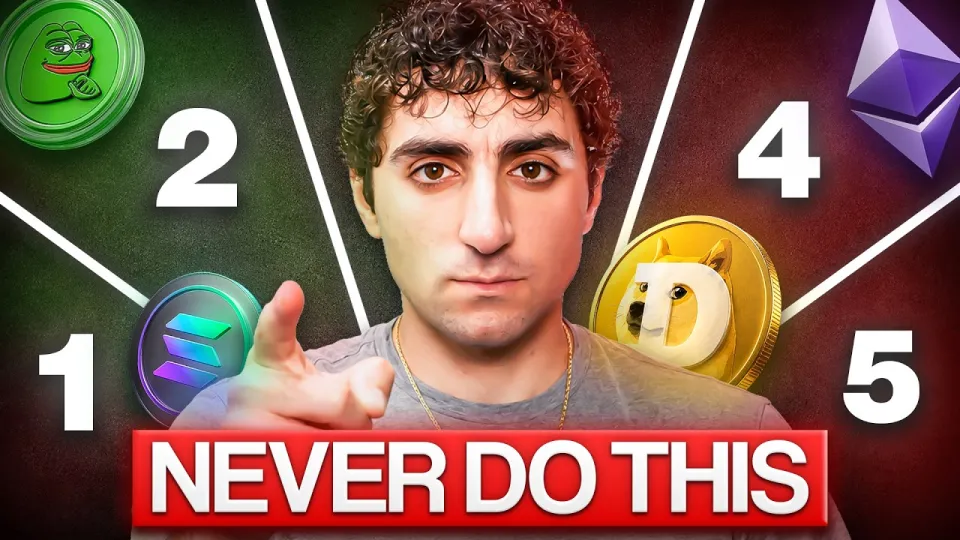
Video: 5 Things I Wish I Knew Before Trading Memecoins (Learn From My Mistakes)
You can order the same kind of articles for your own video to boost it on YouTube and Google. Just message the Telegram bot @sat_sit_bot. Articles with your video embedded are written and posted by the bot itself — on popular topical sites (no ads). Try it free: 50 articles on us.
Meme coin trading is a patience and risk-management game, not a lottery: the traders who survive treat every memecoin as a small, capped bet, buy during quiet consolidation instead of green candles, and take profits in tranches. Everything else — the ticker, the mascot, the Telegram hype — is secondary. If you want to practise the mechanics with a low-friction account, register on fomo via the rasmr link and keep the first deposits small enough to lose without pain.
The channel rasmr built a whole video around the mistakes he wishes he had avoided before trading memecoins, and the viewer comments underneath confirm the same pattern: people lose their whole portfolio during a bear market simply because they were bored, while newcomers admit they repeated every error in their first month. This article turns that experience into a practical checklist you can apply before the next trade.
What a meme coin actually is and why price moves so fast
A meme coin is a token whose value rests almost entirely on community attention and liquidity rather than on revenue, users or a product. Bitcoin has miners and halving economics, a DeFi protocol has fees, but a memecoin has a narrative: a mascot, a meme format, a founder's personality or a viral moment. That means its price is a pure supply-and-demand auction where the marginal buyer sets the level.
Three structural facts explain the violence of memecoin charts:
- Thin liquidity. A pool with a few hundred thousand dollars of depth can move 30–50% on a single mid-sized sell. Slippage is not a detail, it is the main cost of trading.
- Concentrated supply. If the top ten wallets hold a large share of the float, one of them exiting is a crash. Check holder distribution and whether the deployer wallet still holds tokens.
- Reflexive attention. Volume follows price and price follows volume. A coin trending on social feeds attracts buyers who never read a chart, and the same crowd disappears in hours.
None of this makes memecoins untradeable. It makes them a market where the exit is harder than the entry, and where the person who plans the exit before buying is the one who keeps the profits.
Rule one: decide your position size before you look at the chart
Position sizing is the single decision that determines whether a bad trade is a lesson or a funeral. Because memecoins can drop 70–90% in a session and liquidity can vanish entirely, the amount you put in must be money you can see go to zero without changing your life.
A workable framework used by many retail traders:
- Cap each memecoin bet at a small fixed percentage of the portfolio — commonly 1–5% — and treat it as already spent.
- Cap the total memecoin exposure separately, for example 10–20% of the portfolio, so five bad bets do not compound into one catastrophe.
- Never add to a losing position to average down; memecoins have no fundamental floor to average toward.
- Keep the rest of the portfolio in assets you do not need to watch every hour.
The boredom problem sits right here. Several viewers describe losing an entire portfolio in a bear market not because a thesis failed but because sitting in stablecoins felt unbearable. If you cannot sit still, size down until you can.
Rule two: buy consolidation, not the green candle
Entering during consolidation — a sideways range after a run-up or after a dump — gives you a defined invalidation level and a better average price. Entering a vertical candle means you are the exit liquidity for someone who bought earlier.
A practical pre-entry checklist:
- Wait for the price to stop making higher highs and build a range with visible support.
- Confirm liquidity: pool size, whether liquidity is locked, and how much a realistic order of your size would slip.
- Check the holder list for a single wallet that could dump on you.
- Define the stop below the range, not at a round number everyone else uses.
- Only then size the position, and only if the risk in dollars is acceptable.
A common viewer question is whether to buy during consolidation or wait for confirmation such as good news. The honest answer: news in memecoins is usually the top, because by the time a headline or an influencer post exists, the move is priced. Consolidation plus volume expansion is a more reliable signal than an announcement.
Rule three: take profits in tranches and respect the exit
Unrealised profit is not profit. Memecoin charts are famous for round-tripping a 5x back to entry, and the traders who keep gains sell into strength on a schedule rather than on emotion.
A simple tranche plan: sell roughly a quarter to a third at the first target, another slice at the second, recover the initial capital, and let a small remainder run with a trailing stop. Once the initial stake is out, the trade can no longer hurt you, which changes your decision-making for the better.
Equally important is the stop. Set it at entry, write it down, and do not move it lower because the chart 'looks like it will bounce'. In a market with no cash flows, hope is not a thesis.
Rule four: treat security and liquidity as part of the trade
Many memecoin losses are not market losses at all — they are technical. Before any purchase, verify that the token contract is not a honeypot, that the liquidity is locked or burned, and that the deployer cannot mint unlimited supply. Wallets connected to a trading site should be separate from the wallet holding your long-term assets.
Also account for costs that do not appear in the price chart: network fees, swap fees and slippage. On a thin pool, a round trip can quietly cost double digits in percentage terms, which means a trade needs a real edge just to break even.
Rule five: build a process instead of chasing the next runner
A process beats a hot ticker every time. Write down, before each trade, why you are entering, where you are wrong, how much you risk and where you take profit. Then review the log weekly. Over a few months the log will show which mistakes are yours — chasing, oversizing, boredom — and those are fixable, unlike luck.
Newer traders often say the educational content helped more than any signal group, and that is the point: the skill being built is discipline, not prediction. Nobody can forecast which meme will trend next week; everybody can control size, entry conditions and exits.
Common questions traders ask before their first memecoin trade
Most doubts repeat across forums and comment sections. Is it too late to start after a loss? No — but restart with smaller size and a written plan. Should you buy consolidation or wait for news? Consolidation, because news usually arrives after the move. How much of a portfolio belongs in memecoins? A small, capped share you can lose entirely. What separates survivors from the rest? Patience and exits, not picks.
Final thoughts
Memecoin trading rewards patience and punishes boredom, and the five rules above — size first, buy consolidation, take profits in tranches, verify security and liquidity, keep a written process — cover most of what separates a survivable account from a blown one. The rasmr breakdown is a useful starting point precisely because it is built on mistakes rather than on wins. If you want to test the workflow with a small account, sign up on fomo through the rasmr referral link and keep the first position small enough that a total loss teaches you something instead of setting you back.
Key takeaways
- Meme coins are pure sentiment assets: no cash flow, no earnings, only liquidity and attention — price is set by who buys next, not by fundamentals.
- Position sizing is the main survival tool: risk a fixed small slice of the portfolio per trade so a single rug or -80% candle cannot end the account.
- Most losses come from boredom trading and chasing green candles after the move already happened, not from picking the wrong ticker.
- Taking profits in tranches (for example 25–30% at each target) beats holding for an imaginary 100x that rarely arrives.
- Liquidity and holder distribution matter more than the logo: check pool size, lock status and top-wallet concentration before entering.
Source: 5 Things I Wish I Knew Before Trading Memecoins (Learn From My Mistakes) · Markdown version
Questions & answers
How much of my portfolio should go into meme coins?
Treat memecoin exposure as money already spent. Many traders cap a single position at 1–5% of the portfolio and total memecoin exposure at 10–20%, because a token can drop 70–90% or lose liquidity entirely within hours.
Should I buy during consolidation or wait for news confirmation?
Consolidation is usually the better entry: the range gives you a clear invalidation level and a calmer average price. In memecoins, news and influencer posts typically appear after the move has already happened, which makes them a poor confirmation signal.
Why do traders lose their whole portfolio even when they pick good coins?
Oversizing and boredom trading are the usual causes. Sitting in stablecoins during a quiet market feels unbearable, so people force trades with no edge; combined with large position sizes, a few of those trades can erase an account.
When should I take profit on a memecoin?
Sell into strength on a plan: for example a quarter to a third at the first target, another slice at the second, and recover your initial capital early. Letting a small remainder run with a trailing stop keeps the trade from round-tripping back to entry.